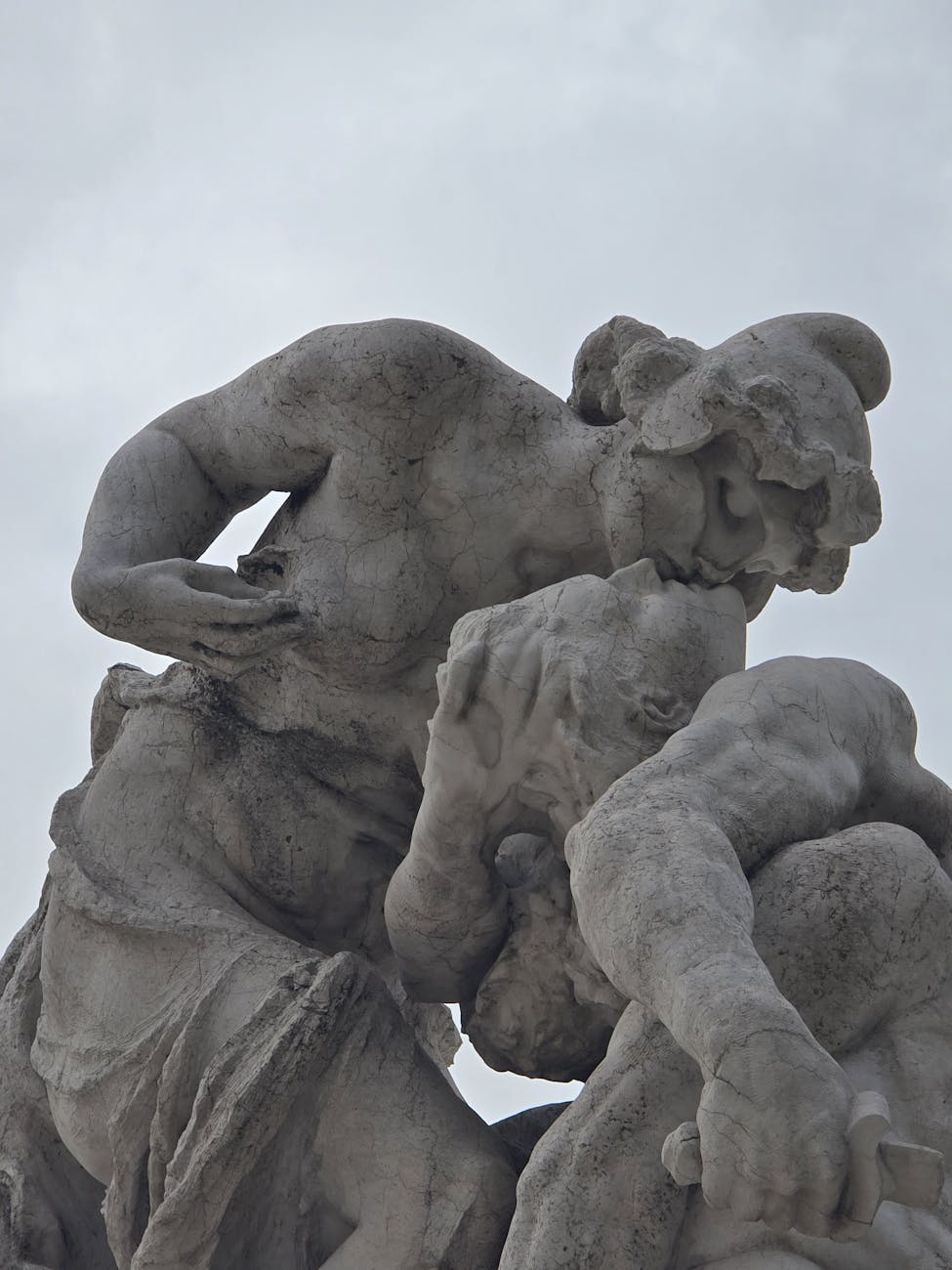
Orpheus falls in love with this beautiful nymph, Eurydice. Soon after their marriage, Eurydice’s bitten by a viper and poison courses through her body, and she’s killed.
There’s a certain kind of person who hears the myth of Orpheus and Eurydice and says, confidently, I would have just kept walking. And something about that confidence gives it away, because the person saying it has never walked into the dark for anyone.
Here’s the story. Orpheus was a musician whose grief was so immense, so undeniable, that it moved the gods of death themselves. When Eurydice died, he didn’t accept it. He walked into the Underworld, into actual death, and played until Hades wept. And the gods gave her back. One condition: walk out, don’t look back until you both reach the surface.
He looked back.
We have spent centuries calling it weakness. A fatal flaw. The moment a man let doubt ruin everything. But that reading requires us to ignore what love actually feels like in the body, which is to say, it requires us to be a little dishonest.
He was walking in complete darkness. No light, no sound, no way to know if she was behind him or if the whole thing had been a cruel joke. In some versions of the myth he hears her stumble; in others, the silence itself becomes unbearable. He thinks he’s been tricked. And so he turns, not because he stopped loving her, but because he loved her so much he could not take one more step without knowing she was there.
That’s not a flaw. That’s the most human thing in the entire story. He looked back cause he actually didn’t know if she was still there.
To love someone is to need proof of them. It’s to reach across the dark and not be able to help it. That’s why it’s a tragedy and not just a failure. Failures are correctable. Failures mean you did something wrong and could have done it differently. What he did just proves that after all, he was still human. But Orpheus couldn’t have done it differently, not if he loved her, not really. The tragedy is that love and loss are built from the same impulse. He turned around because he loved her enough to descend into hell, and that same love made it impossible to keep walking in silence. He loves her so much he can’t save her. The myth isn’t warning us against doubt. It’s telling us something true about what devotion costs.
So when someone says I would simply not turn around, ask them: would you have gone into the Underworld at all? Would you have stood before the gods of death and made your grief into music? Because Orpheus didn’t fail at the end of a brave journey. The bravery and the failure are the same thing. You can’t have one without the other. You can’t love like that and also keep walking calmly in the dark.
The people who would simply not look back, they’re right. They wouldn’t look back. But they also wouldn’t be Orpheus. And they wouldn’t love like he did. Be serious. I don’t judge Orpheus cause I’m like him, I would have definitely turn around to make sure she was still there. At the end of the day we are all human that make mistakes. I’m like Orpheus in that sense. Everyone who says they wouldn’t turn around is lying to themselves. No, Orpheus didn’t fail Eurydice, you just don’t understand love.